
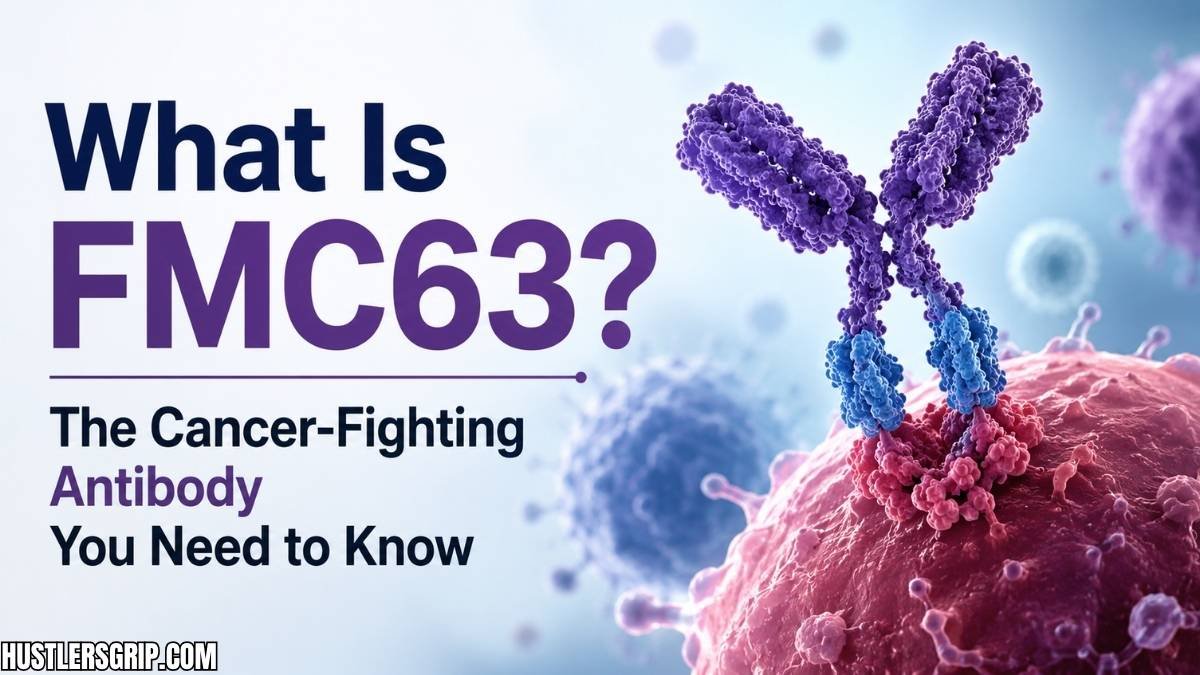
What Is FMC63? The Cancer-Fighting Antibody You Need to Know
Introduction
Have you ever heard a doctor or a biology student casually drop the term “FMC63” and wondered what it means? It might sound like a secret code from a medical drama, but it’s actually a tiny, powerful tool that’s changing the way we fight cancer. In simple words, what is FMC63? It is a special mouse‑made antibody that can recognize and lock onto a specific marker on cancerous B‑cells. This ability has made FMC63 a superstar in a revolutionary therapy called CAR‑T cell therapy. Whether you are a patient, a student, or just a curious reader, understanding FMC63 opens a window into one of the most exciting breakthroughs in modern medicine. Let’s break it down without the heavy science jargon.
What Exactly Is FMC63? The Simple Answer
FMC63 is a mouse‑made monoclonal antibody. It is designed to find and stick to a protein called CD19, which sits on the surface of cancerous B‑cells. Because CD19 is present on most B‑cell leukaemias and lymphomas, FMC63 helps the immune system locate and destroy these dangerous cells.
Key features of FMC63 at a glance:
| Feature | What it means |
|---|---|
| Type | Monoclonal antibody (mouse‑derived) |
| Target | CD19 protein |
| Function | Binds to CD19 to mark cancer cells for destruction |
| Use | Core part of CAR‑T cell therapy |
[What is FMC63? It is the homing beacon that guides immune cells straight to B‑cell cancers.]
How Does FMC63 Work Inside the Body? A Step‑by‑Step Look
To answer “what is FMC63”, you need to see it in action. Imagine your immune system has a special forces unit – T‑cells. Normally T‑cells don’t recognise cancer cells because those cells look too much like healthy ones. FMC63 changes that.
Step 1: Locking onto the CD19 Marker
FMC63 acts like a high‑precision GPS. It specifically targets CD19, a protein found on the surface of B‑cells (both healthy and cancerous). Unfortunately, CD19 is also present on harmful B‑cells in leukaemias and lymphomas, which makes it a perfect “red flag”.
Step 2: Guiding T‑Cells
Scientists take a small part of FMC63 – called a single‑chain variable fragment (scFv) – and attach it to a T‑cell. This modified T‑cell now carries the FMC63 “receptor” on its surface. When that T‑cell meets a cell with CD19, the receptor locks on and activates the T‑cell to kill the cancer cell.
Helpful Tip: Think of FMC63 as a key that fits only a CD19 lock. Once the key turns, it signals the T‑cell to attack.
FMC63 and CAR‑T Therapy: A Life‑Saving Partnership
The real magic of FMC63 happens inside CAR‑T therapy. CAR stands for Chimeric Antigen Receptor – a man‑made receptor that blends FMC63’s targeting ability with the T‑cell’s killing power. Here’s how it works in four easy steps:
- Collect blood from the patient.
- Isolate T‑cells and genetically engineer them to display the FMC63‑based CAR.
- Multiply the upgraded T‑cells in a lab.
- Infuse them back into the patient, where they seek and destroy CD19‑positive cancer cells.
Today, several FDA‑approved CAR‑T therapies (like Kymriah and Yescarta) rely on FMC63. These treatments have produced remarkable results for people with advanced B‑cell acute lymphoblastic leukaemia (ALL) and certain lymphomas – patients who had run out of options.
Real insight: Studies show that CAR‑T cells built with FMC63 can lead to long‑term remission in a significant number of patients, something that was nearly unheard of a decade ago.
Why Is FMC63 So Special Compared to Other Antibodies?
You might wonder, “There are thousands of antibodies – why does everyone talk about FMC63?” The answer lies in three unique strengths:
- High specificity: FMC63 binds to CD19 without cross‑reacting with other proteins, which reduces damage to healthy tissues.
- Strong track record: It has been used in research for over 30 years and is the most common CD19‑targeting antibody in CAR‑T trials worldwide.
- Proven safety: Because it is a mouse antibody, scientists have extensively humanised it to avoid major immune reactions while keeping its targeting power.
Beyond Cancer: Other Exciting Roles of FMC63
While cancer therapy is its main stage, FMC63 also shines in the laboratory:
- Detecting CAR‑T cells: Researchers use FMC63‑based reagents to count how many engineered T‑cells are in a patient’s blood after treatment.
- Studying B‑cell biology: It helps scientists explore how B‑cells develop and how they go wrong in autoimmune diseases.
- Developing next‑generation therapies: New versions of FMC63 are being tested for conditions like lupus and rheumatoid arthritis, where overactive B‑cells are the problem.
What Are the Risks? A Balanced Look
No medical breakthrough is perfect. CAR‑T therapy with FMC63 can cause side effects, most notably cytokine release syndrome (CRS) – a strong immune reaction that may bring fever, low blood pressure, and breathing difficulty. Another risk is B‑cell aplasia: because healthy B‑cells also carry CD19, they are wiped out along with the cancer. Patients then need regular immunoglobulin infusions to fight infections.
However, doctors have become skilled at managing these side effects. Most people recover fully, and the benefit of eliminating a deadly cancer usually far outweighs the risks.
Trust signal: Major cancer centres like MD Anderson and Memorial Sloan Kettering use FMC63‑based CAR‑T therapy, a testament to its reliability.
Conclusion: A Tiny Antibody with a Giant Impact
FMC63 may be a small molecule, but its impact on cancer treatment has been enormous. By understanding what is FMC63 – a mouse‑made antibody that homes in on CD19 – you now know the engine behind some of the most effective cancer immunotherapies available today. From the laboratory bench to the hospital bedside, FMC63 has given hope to thousands of patients who had few options.
And if you are a student struggling with the language of organic chemistry, remember that mastering a few key terms – just like learning about FMC63 – can make a complex subject feel much more approachable.
Frequently Asked Questions (FAQs)
1. Is FMC63 only used for cancer?
Mostly, yes. Its main job is in CAR‑T cell therapy for B‑cell cancers. But researchers are also exploring it for autoimmune diseases and as a lab tool to study B‑cells.
2. Can I get FMC63 as a pill or injection?
No. FMC63 itself is not given directly to patients. Instead, it is used to engineer a patient’s own T‑cells in the lab, and those cells are then infused back into the body.
3. What is the difference between FMC63 and a regular antibody?
A regular antibody is a complete protein. FMC63 is a monoclonal antibody – a large batch of identical antibodies that all target the same spot on CD19. Its small fragment (scFv) is what scientists use to build CARs.
4. How long does FMC63‑based CAR‑T therapy take?
The whole process – from collecting T‑cells to reinfusing them – usually takes 2 to 4 weeks. The actual infusion takes about an hour.
5. Is FMC63 safe?
The antibody itself is safe when used as intended. The side effects come from the CAR‑T therapy it enables, not from FMC63 alone. Medical teams are trained to manage those reactions.
6. Where can I learn more about organic chemistry slang?
If you’re a chemistry student trying to decode your own textbook’s secret language, check out our guide to Orgo Slang. It’s packed with the insider terms that make organic chemistry less intimidating.


