
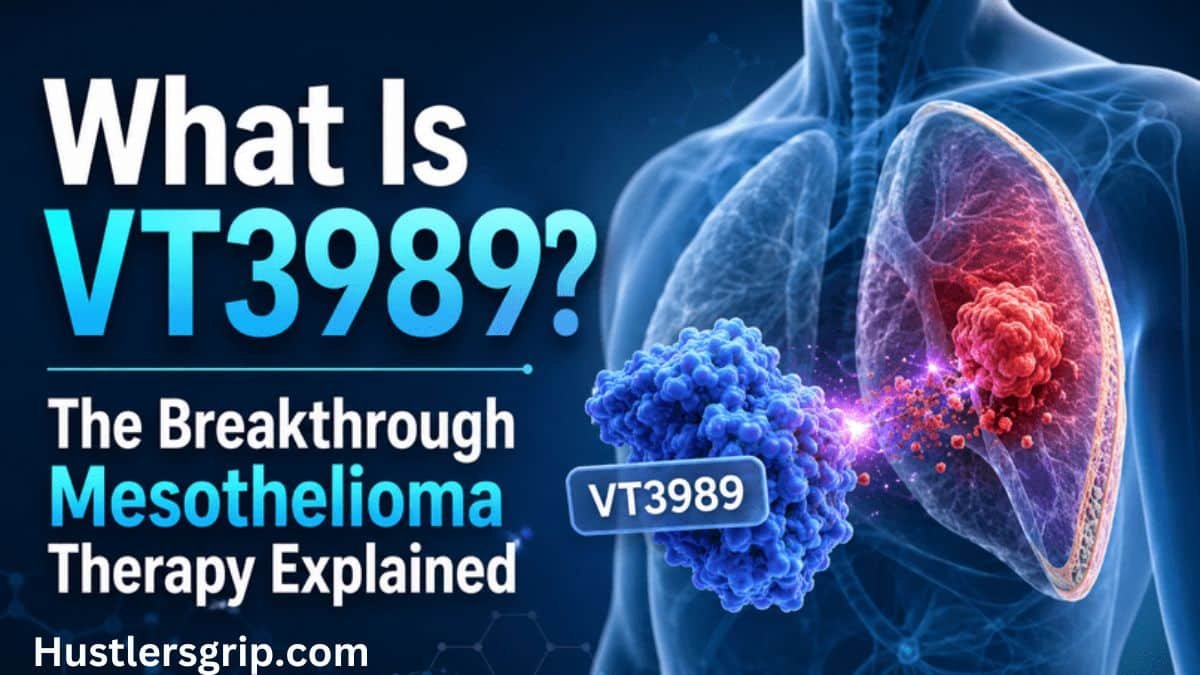
What Is VT3989? The Breakthrough Mesothelioma Therapy Explained
Introduction
Are you or a loved one searching for new options against cancer? Have you heard whispers about a new drug with the code name VT3989 and wondered what it is all about? You are in the right place. VT3989 is not a new piece of tech; it is a first-of-its-kind oral cancer treatment making headlines for its potential against difficult-to-treat cancers like mesothelioma. According to researchers, this innovative therapy works by blocking a specific pathway that fuels cancer growth, offering new hope to patients who have run out of options.
What Exactly is VT3989?
VT3989 is a first-in-class experimental cancer drug developed by the biotech company Vivace Therapeutics. Its main job is to stop a specific “chain reaction” in cancer cells that allows them to grow uncontrollably.
Here is a quick breakdown of what makes it unique:
- First-in-Class: It is the first type of medication to work in this specific way.
- Oral Pill: Patients take it by mouth, not through an IV.
- Targeted Therapy: It goes after a specific weakness in cancer cells.
- FDA Recognition: It has received important designations (Orphan Drug & Fast Track) from the FDA for mesothelioma, which helps speed up its development.
The Science Behind VT3989: Blocking the Hippo Pathway
To understand VT3989, we need to look at what is happening inside a cancer cell. It all starts with the Hippo Signaling Pathway.
The “Off” Switch That Breaks
Think of the Hippo pathway as the body’s natural “stop growing” signal. It acts like a dimmer switch, telling cells when to stop dividing. In some aggressive cancers, this switch breaks, leaving the “grow” signal stuck in the “on” position, which leads to tumors. VT3989 is designed to turn that switch back off.
VT3989: The YAP-TEAD Inhibitor
Within the broken Hippo pathway, two proteins work together to cause trouble: YAP and TEAD. VT3989 is a YAP-TEAD inhibitor. It works by blocking a specific chemical change on the TEAD protein. Once blocked, the YAP protein cannot deliver its “grow” signal, and the cancer cell’s growth is stopped.
Why Mesothelioma? The Target of VT3989
You will often see VT3989 linked to mesothelioma. This is because about 70-80% of mesothelioma tumors have a mutation in a gene called NF2, which shuts down the Hippo pathway. Since VT3989 specifically targets the YAP-TEAD part of this broken pathway, it is a perfect match for this cancer. For decades, mesothelioma patients have had limited treatment options, making a new targeted therapy like VT3989 desperately needed.
Incredible Clinical Trial Results
So, does it work? In a Phase 1/2 clinical trial run by researchers at MD Anderson Cancer Center, the results for VT3989 were very encouraging. Out of 22 patients with advanced mesothelioma who were treated with the optimized dose:
- 7 patients (32%) saw their tumors shrink by at least 30%.
- 12 more patients (54%) had their tumors stop growing completely.
- This gives an 86% Disease Control Rate (the tumor either shrank or stopped growing).
“This study has multiple important takeaways, including the demonstration of significant disease control even in this heavily pretreated population.”
— Timothy Yap, M.B.B.S., Ph.D., lead researcher at MD Anderson Cancer Center
Is VT3989 Safe? Side Effects and Tolerability
For a cancer drug that works this well, you might expect severe side effects. Surprisingly, VT3989 has shown a “favorable safety profile.” This means most side effects were manageable and low-grade. The most common side effects included:
- Protein in the urine (proteinuria).
- Tiredness (fatigue).
- Swelling in the hands or feet (peripheral edema).
Importantly, these side effects could be managed with dose adjustments, and the drug was generally well-tolerated by patients.
Featured Snippet: VT3989 at a Glance
Quick Definition: VT3989 is a first-in-class oral YAP-TEAD inhibitor. It works by blocking a key protein interaction (palmitoylation) inside cancer cells, effectively shutting down the growth signal in Hippo pathway-driven cancers like mesothelioma.
The Future of VT3989
Based on the strong trial results, the future for VT3989 is very bright. The FDA granted it Orphan Drug Designation (to encourage development for rare diseases) and Fast Track Designation (to speed up the review process). Vivace Therapeutics is planning to launch a registrational Phase 3 trial in the first half of 2026. This is the final step before a drug can be approved for the public. If successful, VT3989 could become the first approved drug that targets the Hippo pathway.
Lessons from Other Breakthroughs
The journey of VT3989 reminds us of other incredible leaps in science and technology. For example, just as scientists had to innovate to solve the water crisis with the Micro Magsorption Water Purification Method, they are now using innovative methods like “chemical biology” to create life-saving cancer therapies. Both involve seeing a problem at a microscopic level and engineering a precise solution to fix it.
Conclusion and Final Thoughts
VT3989 represents a major step forward in the fight against difficult cancers like mesothelioma. By successfully turning off a previously “undruggable” pathway, it has shown remarkable results, giving hope to patients who had few options left. With a high 86% disease control rate and a manageable safety profile, it is a prime example of how science is moving toward more precise and effective cancer treatments. If you or a loved one is facing a Hippo-driven cancer, discussing the availability of VT3989 clinical trials with a medical professional could be a vital next step in your treatment journey.
Frequently Asked Questions
Q: Is VT3989 approved by the FDA?
A: No, not yet. VT3989 is currently an “investigational” drug, meaning it is still being tested in clinical trials. However, it has received Orphan Drug and Fast Track designations from the FDA, which helps speed up the approval process.
Q: What type of cancer does VT3989 treat?
A: The primary focus is on mesothelioma, especially in patients who have stopped responding to standard chemotherapy or immunotherapy. It is also being studied in other solid tumors that have NF2 gene mutations.
Q: Is VT3989 a form of chemotherapy?
A: No. VT3989 is a targeted therapy. While chemotherapy kills all fast-dividing cells, targeted therapies like VT3989 are designed to attack specific proteins or pathways inside cancer cells, which often leads to fewer severe side effects.
Q: How do patients get access to VT3989?
A: Currently, the only way to receive VT3989 is by participating in an ongoing clinical trial. Patients can talk to their oncologist about trial locations, which are currently in the US and Australia (NCT04665206).
Q: What is the Hippo pathway?
A: The Hippo pathway is a signaling pathway inside our cells that controls organ size and stops cells from growing too much. In many cancers, this pathway is broken, which is where VT3989 comes in to fix it.
Q: Does VT3989 have any side effects?
A: Yes. The most common side effects reported in trials have been increased protein in the urine (proteinuria), fatigue, and swelling in the extremities. Most of these are considered mild to moderate and manageable by doctors


