
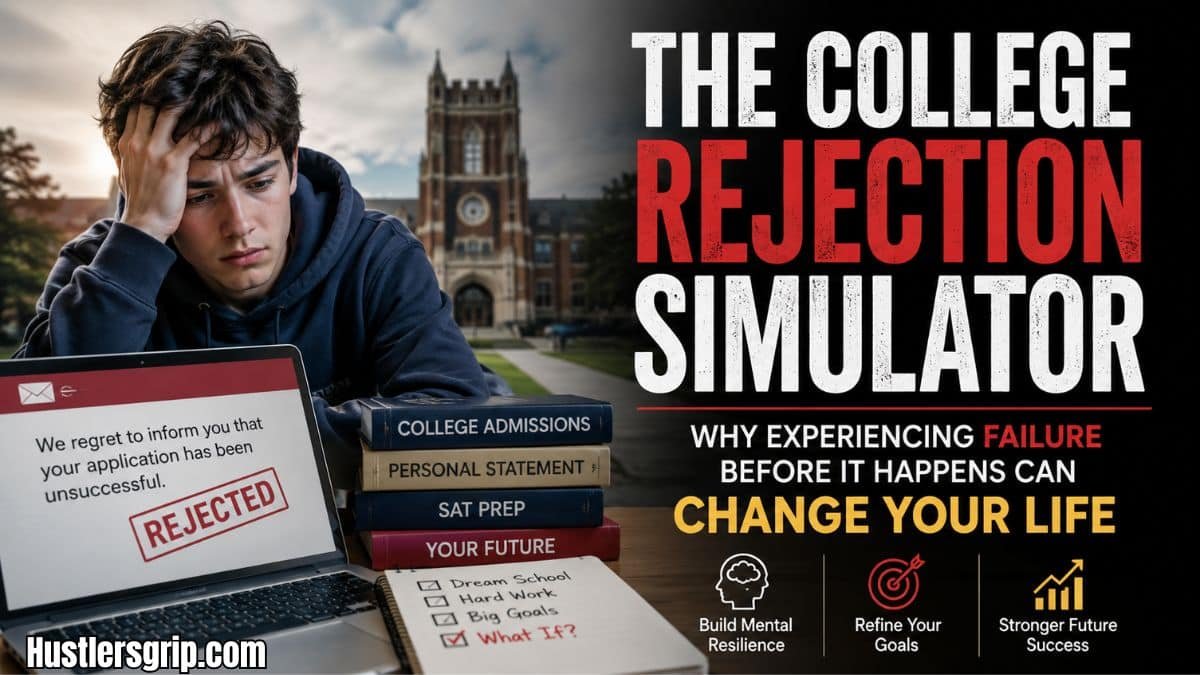
The College Rejection Simulator: Why Experiencing Failure Before It Happens Can Change Your Life
Introduction
Getting rejected from college hurts. It stings. It makes you question everything you’ve worked for. But what if you could experience that rejection before it actually happens? What if you could open a rejection letter, feel the disappointment, and learn to handle it — all without risking your real future?
That’s exactly what a college rejection simulator does. These digital tools let students face simulated college rejection letters from real universities. They help you prepare for the worst while hoping for the best. And more and more students are using them to build emotional resilience before decision day arrives.
What Is a College Rejection Simulator?
A college rejection simulator is a digital tool or game that mimics the experience of receiving a rejection letter from a college or university. These simulators generate realistic-looking rejection letters from real schools, allowing students to experience the emotions of rejection in a safe, controlled environment. Some simulators are simple websites that generate letters, while others are full games that simulate the entire college application process. The goal is to help students build emotional resilience and reduce the shock of real rejection.
Why College Rejection Simulators Are Becoming Popular
College admissions have never been more competitive. In 2026, top universities reported record-low acceptance rates. Caltech admitted just 2.6% of applicants. Harvard’s acceptance rate was around 3.2%. Stanford came in at 3.6%. These numbers mean one simple thing: most students who apply to elite schools will get rejected.
The Mental Health Crisis in College Admissions
The pressure is taking a toll. Research shows that 76% of students feel college admissions is a life-defining moment. Sixty-five percent of 12th graders express concerns about their mental health during the college prep frenzy. Students report feeling overwhelmed, anxious, and terrified of failure.
Rejection simulators offer a solution. They let students face their fears head-on in a low-stakes environment. By experiencing simulated rejection, students can:
- Reduce the shock of a real rejection letter
- Build emotional coping skills
- Normalize rejection as a normal part of life
- Gain perspective on what really matters
As one college prep expert puts it: “If you get into all the schools on your college list, you may have avoided challenge”. Challenge builds character. And rejection simulators provide that challenge safely.
How a College Rejection Simulator Works
Most college rejection simulators follow a simple pattern. You provide some basic information about yourself — your GPA, test scores, extracurricular activities, and target schools. The simulator then generates a realistic rejection letter from one or more of those schools.
Some simulators are more sophisticated. They use algorithms that mimic real admissions decisions based on:
- Academic performance (GPA and course rigor)
- Standardized test scores (SAT, ACT)
- Extracurricular involvement
- Essay quality (simulated)
- Demographic factors
- Institutional priorities
The simulator then produces a letter that looks and feels like the real thing. It includes the school’s letterhead, formal language, and sometimes even specific reasons for rejection.
Real Example: IvyHub Rejection Simulators
One popular platform, IvyHub, offers rejection simulators that let students view rejection letters from the world’s top colleges and universities. Students can experience what it feels like to be rejected from schools like Harvard, Yale, Stanford, Princeton, and MIT. The goal is simple: prepare yourself emotionally so that if rejection comes, it doesn’t destroy you.
Game-Based Simulators
Some college rejection simulators come in the form of games. For example, “The Game of Life: Your Choices, Your Path” lets students roll dice and move along a game board. Landing on certain spaces triggers college rejection outcomes based on GPA and choices made during the game. Students with a 0-1.9 GPA face “College Rejection – Move back 5” spaces. This gamified approach makes the experience more engaging and less intimidating.
Types of College Rejection Simulators
There are several types of college rejection simulators available today. Each serves a slightly different purpose.
1. Letter Generators
These are the simplest form of college rejection simulator. You visit a website, select a school, and receive a realistic rejection letter. Some generate letters from multiple schools at once. These are great for quick exposure therapy.
Examples:
- IvyHub Rejection Simulators
- Various mock rejection letter generators
2. Interactive Games
These simulators turn rejection into a game. You make choices, build a student profile, and see how those choices affect your admissions outcomes. They often include other life events too, like scholarships, internships, and career opportunities.
Examples:
- The Game of Life: Your Choices, Your Path
- Korean Student Simulator
- 수험생 키우기 (Suneung Simulation Game)
3. App-Based Simulators
Mobile apps bring rejection simulation to your phone. Some focus specifically on college rejection, while others are broader rejection therapy tools.
Examples:
- Rejecto: A rejection therapy app with 200+ missions
- RejectIQ: A rejection simulator that delivers “no’s” in different tones
- Korean Student Simulator: Apply to 2,087 majors across 52 universities
4. Mods for Existing Games
Some video games have mods that add college rejection elements. The Sims 4, for example, has mods that let Sims get rejected from university based on their grades and behavior. If a Sim finishes school with a D or F, they receive a permanent rejection letter from all universities.
5. Admissions Committee Simulators
These are more sophisticated tools that simulate the actual admissions committee decision-making process. They show you how admissions officers review applications, assign scores, and make decisions.
The Psychology Behind Rejection Simulators
Why does experiencing simulated rejection actually help? The answer lies in how our brains process fear and disappointment.
Exposure Therapy
Psychologists use exposure therapy to help people overcome fears. The idea is simple: if you’re afraid of something, facing it in a safe environment reduces that fear over time. A college rejection simulator works the same way. By exposing yourself to rejection letters repeatedly, you become less sensitive to them.
The Fear of Rejection
Fear of rejection is one of the most common fears people face. It can hold you back from applying to reach schools, pursuing your dreams, or even trying at all. Research shows that students with ADHD often struggle with rejection sensitivity so intensely that they avoid trying altogether.
A college rejection simulator helps break this cycle. It shows you that rejection:
- Is not the end of the world
- Happens to almost everyone
- Does not define your worth
- Can be survived and even learned from
Building Resilience
Resilience is the ability to bounce back from setbacks. It’s a skill, not a trait. And like any skill, it can be practiced and developed. College rejection simulators provide that practice.
When you receive a simulated rejection, you feel a small version of the real emotion. You process it. You move on. Each time you do this, you build mental muscles that make real rejection easier to handle.
Normalizing Rejection
One of the most powerful effects of rejection simulators is normalization. When you see rejection as something that happens to everyone — something normal and expected — it loses its power to scare you. Many students who use rejection simulators report feeling calmer and more prepared when decision day arrives.
Benefits of Using a College Rejection Simulator
Using a college rejection simulator offers several concrete benefits.
1. Emotional Preparation
The most obvious benefit is emotional preparation. When you’ve already “received” a rejection letter from Harvard, the real one (if it comes) hurts less. You’ve been there before. You know what it feels like. You know you can handle it.
2. Reduced Anxiety
Anxiety often comes from the unknown. What will the letter say? How will I feel? What will I do? A college rejection simulator removes the unknown. You know exactly what a rejection letter looks like and feels like. This knowledge reduces anxiety.
3. Perspective
Rejection simulators help you gain perspective. You realize that rejection is just one outcome among many. It doesn’t erase your achievements, your hard work, or your worth as a person.
4. Motivation
Paradoxically, experiencing simulated rejection can motivate you to work harder. When you see a rejection letter, you might think, “I don’t want that to happen in real life. I need to improve my application.”
5. Safe Practice
A college rejection simulator lets you practice coping skills in a safe environment. You can experiment with different emotional responses, talk through your feelings, and develop strategies for handling disappointment.
6. Confidence Building
Each time you face a simulated rejection and survive, your confidence grows. You prove to yourself that you can handle difficult emotions. This confidence carries over into other areas of life.
7. Community and Support
Some rejection simulators and apps include community features. Users can share their experiences, support each other, and celebrate wins together. This social aspect makes the experience less lonely and more empowering.
Common Mistakes Students Make When Using Rejection Simulators
While college rejection simulators are helpful tools, students sometimes use them in ways that do more harm than good.
Mistake #1: Using Them Too Much
Some students become obsessed with rejection simulators. They generate rejection letters every day, multiple times a day. This can backfire. Instead of building resilience, it can increase anxiety and reinforce negative thinking patterns.
The fix: Use a college rejection simulator once or twice, then step away. The goal is preparation, not obsession.
Mistake #2: Taking Them Too Seriously
Rejection simulators are not real. They use algorithms, not actual admissions committees. Some students forget this and treat simulated rejections as if they were real. This defeats the purpose.
The fix: Remember that a college rejection simulator is a tool, not a prediction. It’s for emotional preparation, not fortune-telling.
Mistake #3: Avoiding Real Applications
Some students use rejection simulators as an excuse to avoid applying to reach schools. They think, “If I’m going to get rejected anyway, why bother?”
The fix: Use the simulator to build courage, not to make decisions. Apply to reach schools. You never know what might happen.
Mistake #4: Ignoring the Learning Opportunity
Rejection simulators can teach you something about yourself. How do you react to disappointment? What emotions come up? How do you cope? Some students miss this learning opportunity by rushing through the experience.
The fix: Take time to reflect after using a college rejection simulator. Journal about your feelings. Talk to someone you trust. Use the experience as a growth opportunity.
College Rejection Simulator vs. Reality: What’s the Difference?
It’s important to understand the differences between simulated and real rejection.
| College Rejection Simulator | Real College Rejection |
|---|---|
| No real consequences | Real consequences for your future |
| You control when and how you experience it | It happens unexpectedly |
| You know it’s not real | It feels very real |
| No impact on your actual applications | It affects your college plans |
| Can be turned off at any time | You have to live with it |
| Builds emotional resilience | Tests your emotional resilience |
| Safe and controlled environment | Unpredictable and uncontrollable |
The simulator prepares you for the real thing. But it’s not a substitute for real-life coping skills and support systems.
Expert Tips for Using Rejection Simulators Effectively
To get the most out of a college rejection simulator, follow these expert tips.
1. Set a Clear Intention
Before using a simulator, ask yourself: “Why am I doing this?” Are you trying to reduce anxiety? Build confidence? Gain perspective? Having a clear intention makes the experience more meaningful.
2. Use It Once or Twice
You don’t need to use a college rejection simulator dozens of times. Once or twice is usually enough to get the benefits. After that, focus on other preparation strategies.
3. Reflect on the Experience
After receiving a simulated rejection, take time to reflect. Ask yourself:
- How did I feel when I saw the rejection?
- What thoughts went through my mind?
- How did I cope with the disappointment?
- What would I do differently next time?
4. Talk About It
Share your experience with someone you trust. Talk about how you felt and what you learned. This social support makes the experience more powerful and less isolating.
5. Combine with Other Strategies
A college rejection simulator is just one tool. Combine it with other strategies like:
- Building a balanced college list
- Working on your applications early
- Seeking feedback from counselors
- Practicing self-care and stress management
- Building a support network
6. Remember the Big Picture
One rejection does not define your life. There are thousands of colleges. There are many paths to success. Keep things in perspective.
Pros and Cons of College Rejection Simulators
Pros
| Pro | Explanation |
|---|---|
| Emotional preparation | Helps you handle disappointment better |
| Reduced anxiety | Removes the unknown element of rejection |
| Safe practice | Lets you practice coping skills in a controlled environment |
| Perspective | Shows you that rejection is normal and survivable |
| Confidence building | Each simulated rejection makes you stronger |
| Accessibility | Most simulators are free and easy to use |
Cons
| Con | Explanation |
|---|---|
| Not real | Cannot fully replicate the emotions of real rejection |
| Potential for overuse | Can increase anxiety if used too much |
| False sense of security | Might make you think you’re prepared when you’re not |
| Algorithm limitations | Simulators don’t capture the complexity of real admissions |
| Emotional impact | Can still cause distress for some students |
Related Articles
- Little Beast Pornhwa: Exploring the Complex World of Webtoons
- Komik Hisashiburi Ni Jikka Ni Kaettara Otouto Ga Ts Shiteta: Exploring the Essence of Sibling Dynamics
- 02045996875: Unveiling Its Impact and Potential
- 01174411569: Revolutionizing Communication in the Digital Age
Conclusion
A college rejection simulator might sound strange at first. Why would anyone want to experience rejection on purpose? But the answer is simple: preparation reduces fear. By facing simulated rejection in a safe environment, you build emotional muscles that help you handle real rejection when it comes.
College admissions are more competitive than ever. Most students will face rejection from at least one school. That’s normal. That’s okay. What matters is how you respond. Do you let rejection define you? Or do you use it as fuel to keep going?
A college rejection simulator helps you choose the second option. It shows you that rejection is survivable and builds your confidence. It gives you perspective. And when decision day arrives — whether the news is good or bad — you’ll be ready.
So go ahead. Try a college rejection simulator. Feel the sting of a simulated rejection letter. Then take a deep breath and remember: you are more than any single decision. Your worth is not determined by a college acceptance. And the best is yet to come.
Ready to build your resilience? Try a college rejection simulator today. Face your fears, build your confidence, and prepare yourself for whatever comes next. Your future self will thank you.
Frequently Asked Questions
Q1: What is a college rejection simulator?
A college rejection simulator is a digital tool that generates realistic rejection letters from colleges and universities. It helps students prepare emotionally for the possibility of rejection by letting them experience it in a safe, controlled environment.
Q2: Does using a college rejection simulator actually help?
Yes. Research and user testimonials suggest that rejection simulators help reduce anxiety, build resilience, and normalize rejection as a normal part of life. However, they work best when used in moderation and combined with other coping strategies.
Q3: Are college rejection simulators accurate?
No. A college rejection simulator is not a real admissions predictor. It uses simple algorithms to generate rejection letters. It cannot account for the complex, nuanced decisions made by actual admissions committees.
Q4: Can a college rejection simulator hurt my chances of getting into college?
No. Using a rejection simulator has no impact on your real college applications. It’s a private tool for emotional preparation. Admissions officers will never know you used one.
Q5: Where can I find a college rejection simulator?
Several websites and apps offer rejection simulators. IvyHub offers rejection simulators for top colleges. Apps like Rejecto and RejectIQ provide broader rejection therapy experiences.
Q6: How many times should I use a college rejection simulator?
Most experts recommend using a rejection simulator once or twice. More than that can increase anxiety rather than reduce it. The goal is preparation, not obsession.
Q7: What should I do if a rejection simulator makes me feel worse?
Stop using it immediately. Talk to a trusted adult, counselor, or mental health professional. A rejection simulator is meant to help, not harm. If it’s causing distress, it’s not right for you.
Q8: Can a college rejection simulator replace real mental health support?
No. A college rejection simulator is a tool, not a treatment. If you’re struggling with anxiety, depression, or overwhelming fear of rejection, seek help from a qualified mental health professional.


