
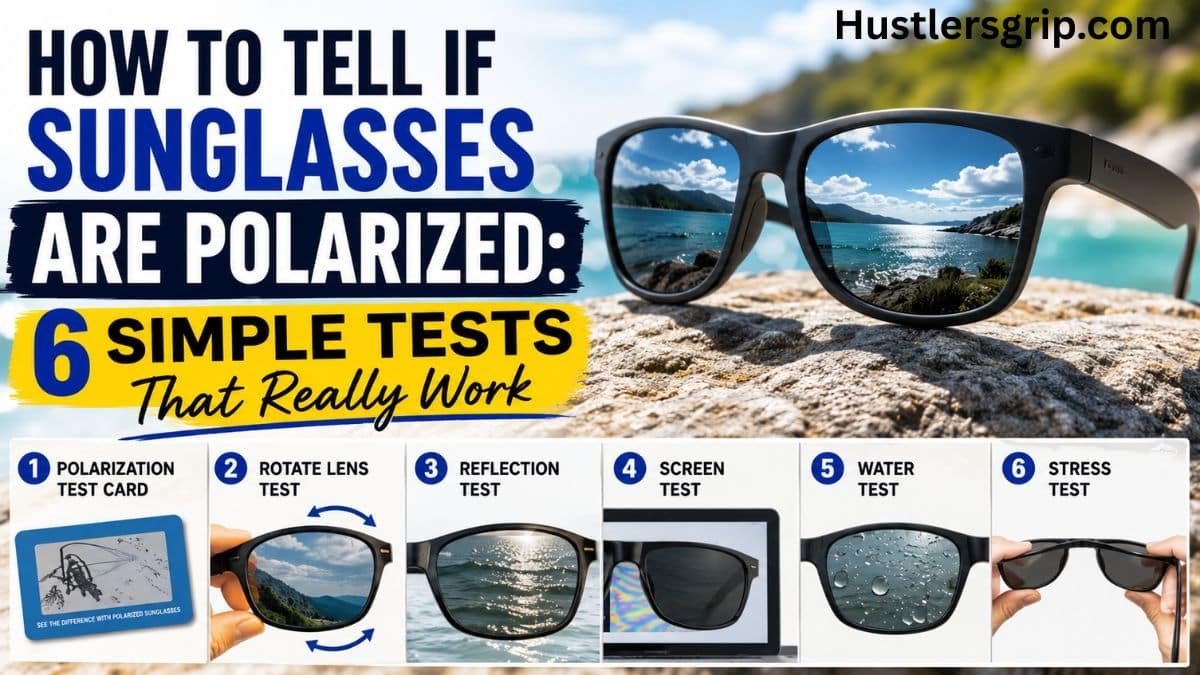
How to Tell If Sunglasses Are Polarized: 6 Simple Tests That Really Work
Introduction
You’re standing in the sunglasses aisle, holding two pairs that look almost identical.One costs twice as much because it says “polarized” on the tag. But how do you know if you’re actually getting what you pay for? Knowing how to tell if sunglasses are polarized can save you money, protect your eyes and make your time outdoors way more enjoyable.
The truth is, not every pair of sunglasses with a “polarized” sticker actually has polarized lenses. Some manufacturers slap the word on the box without delivering the real deal. That’s why learning how to tell if sunglasses are polarized on your own is a skill worth having. Whether you’re shopping for new shades or checking an old pair you found in the car, these simple tests will give you the answer in seconds.
Featured Snippet Definition: ( How to Tell If Sunglasses Are Polarized ) Polarized sunglasses are eyewear with a special chemical filter that blocks horizontal light waves. This filter reduces glare from reflective surfaces like water, roads, snow and glass. Unlike regular tinted lenses that just make everything darker, polarized lenses actually remove the bright, blinding reflection so you can see more clearly and comfortably.
What Are Polarized Sunglasses and How Do They Work?
Before we dive into the tests, let’s understand what polarization actually means. Light from the sun travels in waves that move in all directions. When sunlight hits a flat surface like a road, water, or a car hood, it reflects off that surface in a specific way. The light waves bounce horizontally, creating intense glare that can hurt your eyes and make it hard to see.
Polarized sunglasses have a special chemical coating applied to the lenses in a vertical pattern. Think of it like tiny vertical blinds on your windows. These “blinds” block the horizontal light waves that cause glare while letting vertical light waves pass through. The result? You see clearer, sharper images without the blinding reflection.
Here’s something important to remember: polarized does NOT mean UV protection. Many polarized sunglasses also block UV rays, but not all of them do. Always check the label for “100% UV protection” or “UV400” to make sure your eyes are safe from harmful ultraviolet radiation.
6 Simple Ways to Tell If Your Sunglasses Are Polarized
Now let’s get to the good stuff. Here are six reliable tests you can do right now to find out how to tell if sunglasses are polarized.
1. The Phone Screen Test (Easiest and Fastest)
This is the most popular method because almost everyone has a smartphone nearby. Here’s how it works:
Step-by-step instructions:
- Turn your phone screen to maximum brightness
- Put on the sunglasses you want to test
- Hold your phone at arm’s length in front of you
- Slowly rotate your head about 90 degrees to the left or right
What to look for: If your lenses are polarized, your phone screen will appear much darker or even completely black at certain angles. You might also notice the screen looks like it’s flickering or the brightness changes as you tilt your head.
Why this works: Most phone screens emit polarized light. When your polarized sunglasses align perpendicular to the screen’s light waves, they block most of the light from reaching your eyes. This creates that dramatic darkening effect.
Expert Tip: If your phone doesn’t show clear results, try testing with a computer monitor, tablet, or LCD screen instead. Some newer devices use different screen technologies that might not work as well for this test.
2. The Reflective Surface Test
This test uses real-world glare to check your lenses.
Step-by-step instructions:
- Find a reflective surface like a car hood, glass table, polished floor, or a body of water
- Put on your sunglasses and look at the surface
- Slowly tilt your head from side to side
What to look for: With polarized lenses, you’ll notice the glare dramatically reduce or disappear at certain angles. As you continue tilting, the glare will come back. This change in brightness tells you the lenses are working.
Why this works: Polarized lenses are designed specifically to block horizontally reflected light. When you tilt your head, the angle of the lens filter changes relative to the reflected light, making the glare appear and disappear.
3. The Overlap Test (Two Sunglasses Method)
If you have two pairs of sunglasses—one you know is polarized and one you’re testing—this test is very reliable.
Step-by-step instructions:
- Hold one pair of sunglasses in front of the other, both facing the same direction
- Look through both lenses at a light source
- Slowly rotate one pair about 90 degrees while keeping the other still
What to look for: If the overlapping area turns very dark or nearly black, the lenses are polarized. If there’s no change in darkness, the mystery pair likely isn’t polarized.
Why this works: When two polarized filters are placed perpendicular to each other, they block almost all light from passing through. This creates that dark spot where the lenses overlap.
4. The LCD Display Test
This is similar to the phone screen test but works with other digital displays.
Step-by-step instructions:
- Find an LCD display like a digital clock, ATM screen, gas pump display, or computer monitor
- Look at the display through your sunglasses
- Tilt your head slowly from side to side
What to look for: The display will darken significantly or become completely unreadable at certain angles when you’re wearing polarized lenses.
Why this works: LCD screens emit polarized light, just like phone screens. Your polarized lenses interact with this light, blocking it at specific angles.
5. The Sticker or Label Check
This is the simplest method, but it’s not always reliable.
What to look for: Many sunglasses come with a small sticker that says “polarized” or have “Polarized” engraved on one of the lenses. Some brands also include a test card or sticker that changes appearance when viewed through polarized lenses.
Warning: Labels can wear off or be removed over time. And unfortunately, some manufacturers put “polarized” on the packaging even when the lenses aren’t actually polarized. That’s why it’s smart to use one of the other tests to confirm.
6. The Car Window Pattern Test
This is a lesser-known but very effective test.
Step-by-step instructions:
- Put on your sunglasses
- Look through your car’s rear window or side window
What to look for: Polarized lenses will reveal stress patterns in tempered glass that appear as dark bands, geometric shapes, or wavy lines. These patterns become visible because polarized lenses interact with the way light bends through processed glass.
Why this works: Tempered glass used in car windows creates unique stress patterns that are normally invisible to the naked eye. Polarized lenses make these patterns visible by filtering out certain light waves.
Polarized vs. Non-Polarized Sunglasses: What’s the Difference?
Understanding the difference between polarized and non-polarized sunglasses is key to making the right choice for your needs.
The main difference comes down to this: polarized lenses actively filter out specific light waves that cause glare, while non-polarized lenses just make everything darker. If you’ve ever been driving and been blinded by sunlight reflecting off the road or another car’s windshield, you know exactly why polarized lenses can be a game-changer.
Benefits of Polarized Sunglasses for Everyday Life
Now that you know how to tell if sunglasses are polarized, let’s talk about why you might want them in the first place.
Reduced Glare and Eye Strain
This is the biggest benefit. Polarized lenses cut through the blinding reflection that bounces off water, snow, roads, and glass. When you’re not squinting against glare, your eyes feel less tired at the end of the day.
Sharper Vision and Better Contrast
Polarized lenses don’t just reduce glare—they actually help you see more clearly. Colors appear more vibrant, and details stand out better. Green grass looks greener, blue skies look bluer, and you can actually see what’s beneath the surface of the water.
Safer Driving
Glare from the road or other vehicles can be dangerous when you’re behind the wheel. Polarized lenses cut through that glare, making it safer to drive in bright conditions. You’ll notice road markings more clearly and have better depth perception.
Better Outdoor Experiences
Whether you’re fishing, boating, skiing, hiking, or just spending a day at the beach, polarized lenses make outdoor activities more enjoyable. You’ll see more, strain less, and feel more comfortable in bright sunlight.
Protection from Harmful UV Rays
Many polarized sunglasses also offer 100% UV protection. This helps prevent eye damage like photokeratitis (essentially a sunburn on your eye) and reduces your risk of long-term eye problems. Just remember to check the label—polarization alone doesn’t guarantee UV protection.
When You Should NOT Wear Polarized Sunglasses
As great as polarized lenses are, they’re not perfect for every situation. Here are some times when you might want to skip them:
Viewing Digital Screens
Polarized lenses can make it hard to see LCD screens on car dashboards, ATMs, gas pumps, and some smartphones. This can be frustrating or even dangerous if you’re trying to read important information while driving.
Night Driving
Polarized lenses have a slight dimming effect that can reduce visibility in low-light conditions. They’re designed for bright sunlight, not nighttime driving.
Skiing and Snow Sports
Here’s a surprising one: polarized lenses can make it harder to distinguish between ice and snow. This can be dangerous for skiers and snowboarders who need to see surface conditions clearly.
Pilots and Heavy Machine Operators
Polarized lenses can interfere with reading instrument panels and may make it difficult to see certain displays. For this reason, many aviation and heavy equipment professionals avoid them.
People with Depth Perception Issues
Some people find that polarized lenses affect their depth perception or cause visual distortions. If you have existing vision problems, talk to your eye doctor before investing in polarized sunglasses.
Common Mistakes People Make with Polarized Lenses
Avoid these common pitfalls when shopping for or using polarized sunglasses.
Mistake #1: Assuming Polarized Means UV Protected
This is probably the most common mistake. Polarization and UV protection are two completely different things. You can have polarized lenses with zero UV protection, and you can have non-polarized lenses with excellent UV protection. Always check the label for “100% UV protection” or “UV400.”
Mistake #2: Paying Extra Without Testing
Some sellers charge premium prices for “polarized” sunglasses that aren’t actually polarized. Use the tests we covered above before you buy, especially if you’re shopping at a market, online, or from a brand you don’t know.
Mistake #3: Using Polarized Sunglasses Indoors
Polarized lenses are designed for bright outdoor conditions. Wearing them indoors can make things look darker and more difficult to see. Save them for when you actually need glare protection.
Mistake #4: Not Cleaning Them Properly
The special coating on polarized lenses can be damaged by harsh cleaners or rough fabrics. Use a microfiber cloth and lens cleaner designed for coated lenses. Avoid paper towels, tissues, or your shirt—these can scratch the coating over time.
Mistake #5: Thinking All Polarized Lenses Are the Same
Quality matters. Cheaper polarized lenses might have a thin film that can peel or scratch easily. Higher-quality lenses have the polarizing filter laminated between two layers of lens material. This makes them more durable and longer-lasting.
Related Articles You May Like
Conclusion
Learning how to tell if sunglasses are polarized is a simple skill that can save you money and improve your outdoor experience. The phone screen test, reflective surface test, and overlap test are all quick, easy ways to check your lenses in seconds. Just remember that polarization doesn’t automatically mean UV protection—always check the label for both features.
Next time you’re shopping for sunglasses or wondering about a pair you already own, take a moment to run these tests. Your eyes will thank you for the reduced glare, less strain, and clearer vision. And if you’re spending time driving, fishing, or enjoying the outdoors, polarized lenses might just be one of the best investments you can make for your eye comfort and safety.
Ready to check your sunglasses? Grab your phone or find a reflective surface and try one of these tests right now. You might be surprised by what you discover about the shades you’ve been wearing all along.
Frequently Asked Questions About Polarized Sunglasses
1. Can I tell if sunglasses are polarized just by looking at them?
No, you can’t tell just by looking. Polarized and non-polarized lenses often look identical to the naked eye. You need to do one of the tests we covered, like the phone screen test or the reflective surface test, to know for sure.
2. Do all polarized sunglasses block UV rays?
No. Polarization and UV protection are separate features. While many polarized sunglasses do include UV protection, you should always check the label for “100% UV protection” or “UV400” to be certain.
3. Are polarized sunglasses worth the extra money?
For most people who spend time outdoors, yes. The glare reduction, reduced eye strain, and improved visual clarity make a real difference. However, if you rarely go outside in bright conditions or primarily use sunglasses for fashion, non-polarized might be fine.
4. Why do polarized sunglasses make my phone screen look weird?
Phone screens emit polarized light. When you wear polarized sunglasses, the lenses can block some of this light at certain angles, making the screen appear dark, flickering, or even completely black. This is completely normal and actually confirms your lenses are polarized.
5. Can I drive safely with polarized sunglasses?
Yes, in most cases. Polarized sunglasses are excellent for daytime driving because they reduce glare from the road and other vehicles. However, avoid wearing them at night or if they make it hard to read your car’s dashboard display.
6. How long do polarized lenses last?
With proper care, polarized lenses can last several years. The polarizing filter is usually laminated inside the lens, so it won’t wear out quickly. However, scratches on the lens surface can affect performance. Clean them properly and store them in a case when not in use.
7. Can I get polarized prescription sunglasses?
Yes, many optical shops offer polarized lenses with prescription options. Ask your eye doctor or optician about polarized prescription sunglasses if you need vision correction.
8. Is there a difference between “polarized” and “anti-glare”?
Yes. “Polarized” refers to the chemical filter that blocks horizontal light waves. “Anti-glare” (also called anti-reflective) is a different coating that reduces reflections on the back of the lens. Some glasses have both features, but they’re not the same thing.


